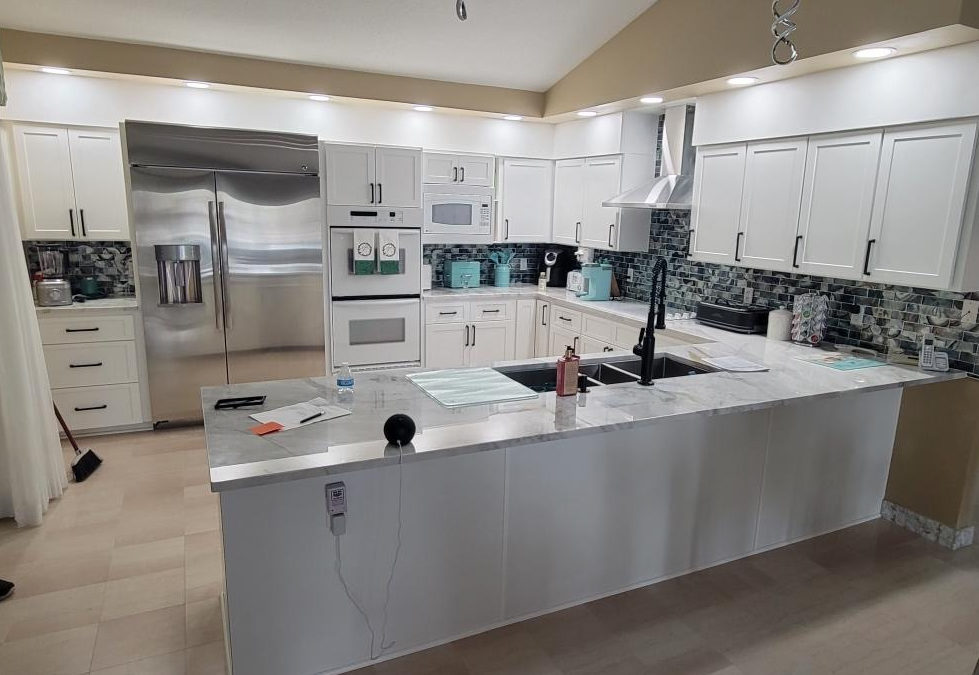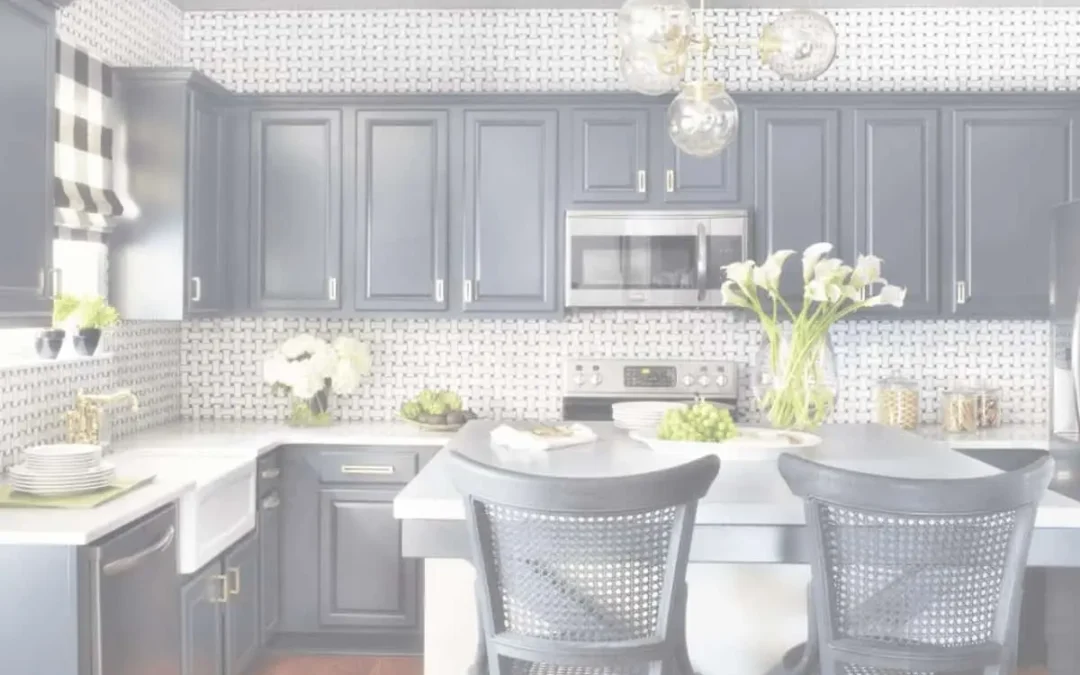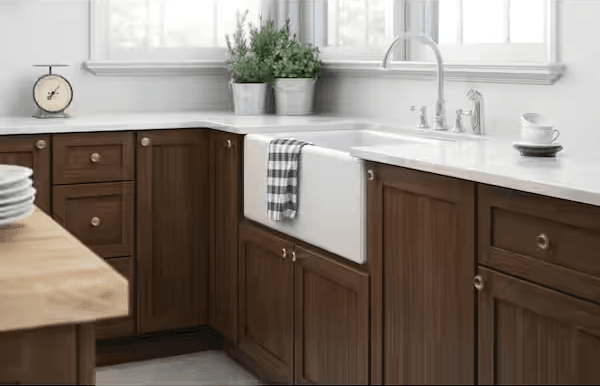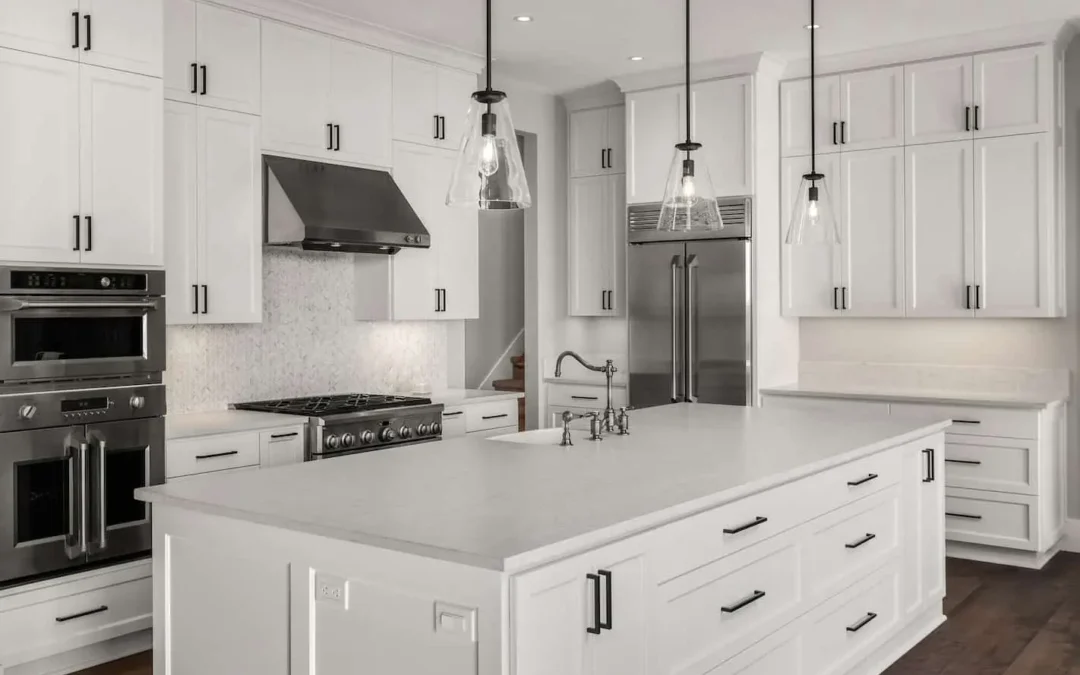
If your laminate cabinets look dated, you may not need a full kitchen remodel to change them. In many cases, you can give them a fresh look by updating the outside while keeping the basic structure in place. That matters if your cabinets still work well and you want to avoid a costly, disruptive overhaul. The key is knowing when refacing makes sense, what challenges laminate brings, and when professional help can give you a better, longer-lasting result.
Understanding Laminate Cabinets and Refacing
Laminate cabinets are common because they offer a clean finish and low upkeep. Many homeowners have a kitchen cabinet setup made with laminate over MDF or plywood, with cabinet boxes that are still solid even when the style feels old.
That is where cabinet refacing comes in. Instead of tearing everything out, you update the outside surfaces, doors, and drawer fronts while keeping the cabinet boxes. If the structure is sound, this can be a simpler way to refresh your space. Let’s break down what laminate cabinets are and what refacing really involves.
What Are Laminate Cabinets?
Laminate cabinets are kitchen cabinets made with a laminate finish applied over a base material such as MDF or plywood. In many homes, the cabinet boxes stay sturdy for years, even if the cabinet fronts start to look worn or out of style. That is why they are so common in budget-friendly and mid-range kitchens.
The laminate surface is part of what gives these units their smooth, easy-care look. It can appear in many colors and styles, and it usually needs only minimal maintenance in day-to-day use. For homeowners who want a quick visual update, that matters.
So, can you reface laminate cabinets without replacing them? Yes, often you can, as long as the cabinet boxes are still in good shape. When the structure is solid, updating the visible parts can give your kitchen cabinets a fresh appearance without starting over.
What Does Cabinet Refacing Involve?
Cabinet refacing focuses on the outside of your cabinetry rather than full removal. The goal is to keep the existing framework and improve the cabinet surfaces you see every day. For many kitchens, that means a faster makeover with less disruption than full cabinet replacement.
In most projects, cabinet refacing includes a mix of surface updates and part replacement. The exact steps depend on the condition of the cabinets and the finish you want.
- Covering exposed areas with new veneer or laminate
- Replacing old fronts with new doors and drawer fronts
- Updating hinges, pulls, and other hardware
- In some cases, choosing refinishing or paint for selected surfaces
If you are wondering about the best way to reface laminate cabinets at home, start with careful prep and realistic expectations. A clean, level surface matters. If the cabinet surfaces are damaged or uneven, professional help may be the smarter choice.
Why Homeowners Choose to Reface Laminate Cabinets
Many homeowners choose refacing because they want a new look without the mess and cost of cabinet replacement. If your kitchen cabinet layout still works, replacing only the visible parts can feel like a smart middle ground.
There is also the time factor. A full renovation can drag on, while refacing is often quicker and easier on daily life. You keep the current setup, avoid major demolition, and still improve the overall style. The next sections explain why that balance appeals to so many people.
Benefits of Refacing vs. Replacing
One big advantage of cabinet refacing is cost. Reusing existing cabinet boxes reduces labor and avoids the extra work that comes with tearing out old units and preparing walls for new cabinets. For homeowners watching their budget, that makes a difference.
It also saves time and cuts down on hassle. Many refacing jobs are completed much faster than full cabinet replacement, so your kitchen is not out of use for long. If your current layout already works well, keeping it can be a practical move.
- Lower cost than full cabinet replacement in many cases
- Faster turnaround than installing new cabinets
- Less waste sent to landfill because existing cabinet boxes stay in place
There are challenges, though. Laminate can be trickier than wood because surface bonding, moisture, and edge quality matter more. That is why good prep and sound materials are important when comparing cabinet refacing with a full changeout.
Common Reasons for a Fresh Cabinet Look
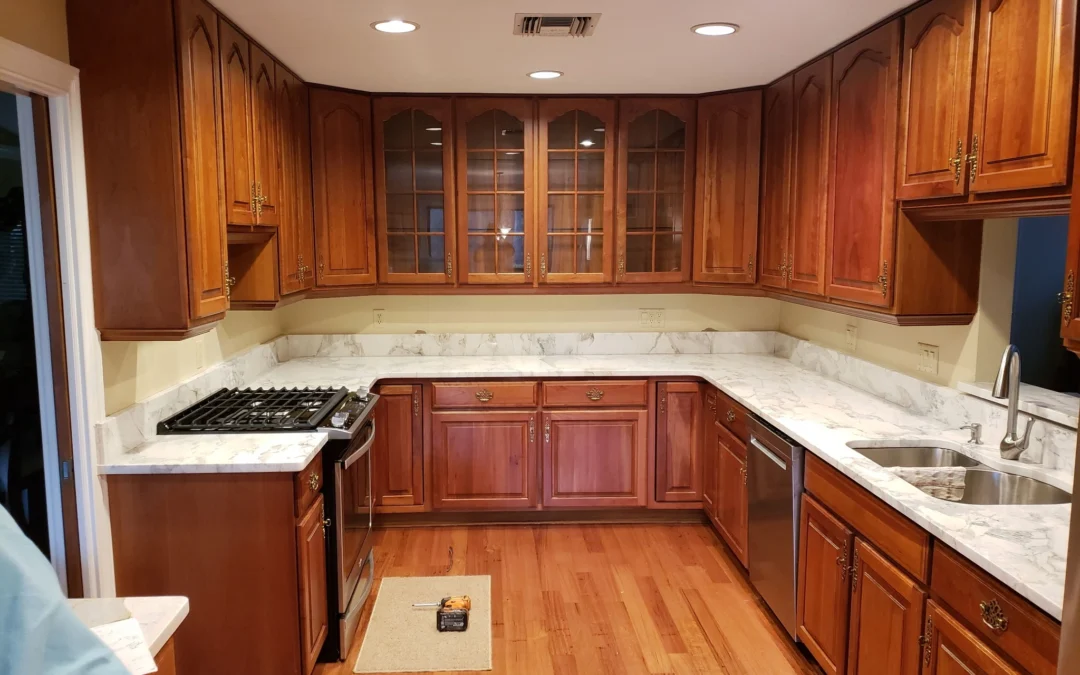
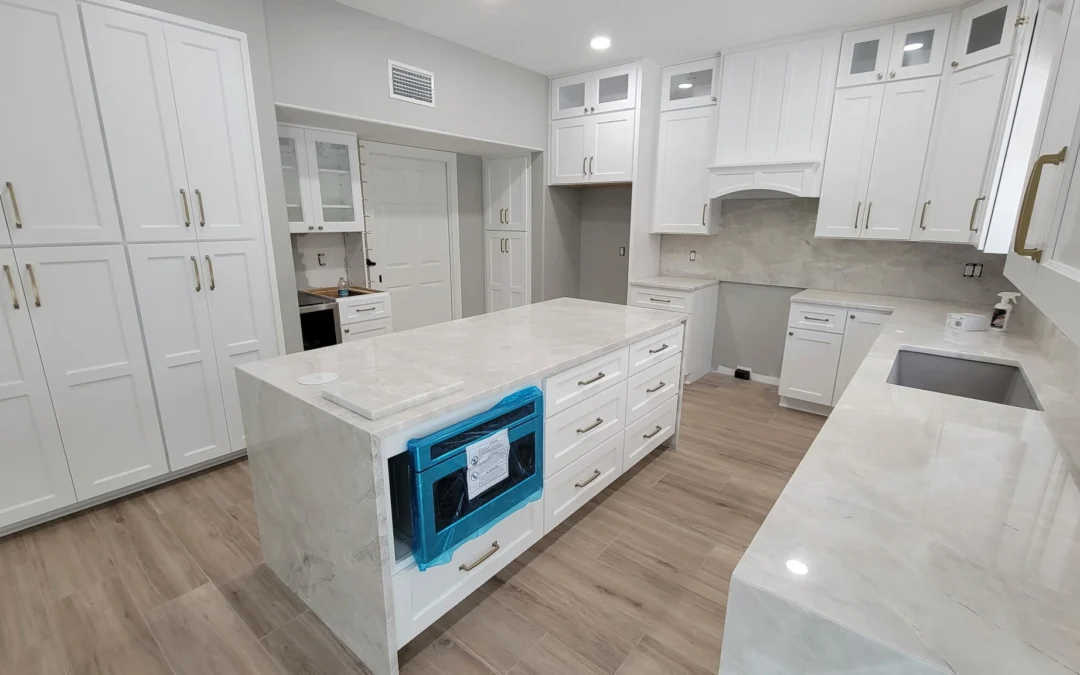
Sometimes the reason is simple: the cabinets still function, but the style feels tired. Many people want a fresh look without turning the project into a full kitchen remodel. If the cabinet boxes are solid, updating the outside can be enough to change the whole room.
Another common reason is convenience. Homeowners often want less mess, less downtime, and less spending. Refacing can offer all three, especially when compared with removing and replacing every unit. That is a major plus in busy homes.
Durability also matters. Some replacement door options are made for minimal maintenance and everyday use around heat and moisture. Add new handles, modern colors, or updated drawer fronts, and the kitchen can feel current again without changing everything behind the doors.
Is It Possible to Reface Laminate Cabinets?
Yes, it is often possible to reface laminate cabinets. The deciding factor is not just appearance. It is the condition of the underlying structure. If your kitchen cabinets are level, sturdy, and free from serious damage, refacing can be a workable path.
That said, laminate needs careful handling. The right products and application methods help create a durable finish that holds up in a busy kitchen. Before you commit, it helps to know how to judge cabinet condition and where laminate refacing can get tricky.
Assessing If Your Cabinets Are Suitable for Refacing
Start with the basics. Existing cabinet boxes should be stable, level, and in good condition. Refacing is a cosmetic update, so it will not solve structural issues hidden underneath the finish. If the bones are strong, your cabinets may be good candidates.
Look closely at the cabinet frames, hinges, and alignment. Doors that hang poorly because of warping, cracked framework, or deep water damage can signal bigger problems. In those cases, refacing may not be enough to create a lasting result.
Does cabinet refacing work on old or damaged laminate surfaces? Sometimes, but only if the damage is minor and repairable. Small flaws may be fixed before new material goes on. If the existing cabinet boxes are warped, damp, or badly broken, starting fresh is usually the better investment.
Challenges Unique to Laminate Cabinet Refacing
Laminate brings its own set of issues. Unlike wood, it does not respond the same way to sanding and bonding. The surface of the cabinets has to be prepped carefully so the new finish or veneer can adhere properly. If that step is rushed, the result may not last.
Moisture is another concern. Kitchens deal with steam, spills, and regular wear, so any weak spot around seams or edges can become a problem over time. That is why solid application matters so much with laminate cabinet refacing.
Sharp edges and trim work can also be harder to handle on laminate than on wood. Clean cuts, smooth corners, and even coverage make a big difference in the final look. These details are often where a DIY job starts to show its limits.
Materials and Tools Needed to Reface Laminate Cabinets
Before you start, gather the right materials and tools. Laminate refacing is not just about appearance. The products you choose affect how well the new veneer bonds, how smooth the finish looks, and how long it lasts on your cabinet boxes.
You also need tools that help with prep, trimming, and installation. Some are basic, while others are more specialized for laminate work. Knowing what belongs on your list can save time and help you avoid mistakes. Here is a simple breakdown of what you will likely need.
Essential Materials for Refacing Laminate Cabinets
The right materials shape the whole project. If you want the finish to hold up, focus on products made for cabinet surfaces and everyday kitchen use. Homeowners often combine replacement parts with finishing supplies, depending on whether they are refacing, painting, or doing light refinishing.
For a basic project, you will need materials for both prep and surface updates. What you buy depends on the condition of your cabinets and the look you want.
- New veneer or laminate for exposed areas
- Glue or adhesive designed for cabinet applications
- Sandpaper for surface prep and edge smoothing
- Primer, a coat of paint, or lacquer if painting is part of the plan
If you are asking what materials are needed to reface laminate cabinets, this is the core list. You may also need filler or repair products for minor flaws before applying a new finish.
Tools You’ll Need to Get Started
Many laminate refacing jobs use a mix of everyday and special tools. Basic prep can be done with common items, but getting neat edges and smooth coverage often takes equipment made for this type of work. That is one reason some DIY projects become harder than expected.
Start with tools that help you clean, prep, press, and trim. A few simple choices can improve your accuracy and the final finish.
- Roller for pressing veneer and smoothing bonded surfaces
- Laminate trimmer for neat edges and corners
- Sanding tools for surface prep
- Screwdrivers or drills for removing hardware and hinges
If you are gathering what materials are needed to reface laminate cabinets, remember that tools matter just as much as supplies. Good prep and clean trimming often decide whether the project looks polished or rushed.
How to Reface Laminate Cabinets – A Step-by-Step Guide
A successful cabinet refacing project usually follows a clear order. You prepare the area, remove the existing doors, repair the surfaces, apply the new finish, and then install updated parts. Skipping steps can lead to poor adhesion or uneven results.
If your goal is a new look, slow and careful work matters more than speed. The cabinet fronts and exposed ends need attention to detail, especially with laminate. The next five steps show the process in a simple way so you can understand what the job involves.
Step 1: Prepare the Cabinets and Work Area
First, clear the work area so you can move safely and keep dust under control. Protect countertops, floors, and nearby appliances before you begin. Good prep reduces mess and helps you focus on the cabinet boxes without damaging other surfaces.
Next, inspect all exposed areas. Check for loose laminate, dents, and signs of moisture. This is also the time to plan your order of work so each section is easy to reach and finish cleanly.
- Remove items from cabinets and nearby counters
- Cover countertops and floors before sanding starts
- Label parts so reassembly is easier later
If you want the best way to reface laminate cabinets at home, start here. A clean, organized work area helps every later step go more smoothly and lowers the chance of mistakes that affect the final finish.
Step 2: Remove Doors, Drawers, and Hardware
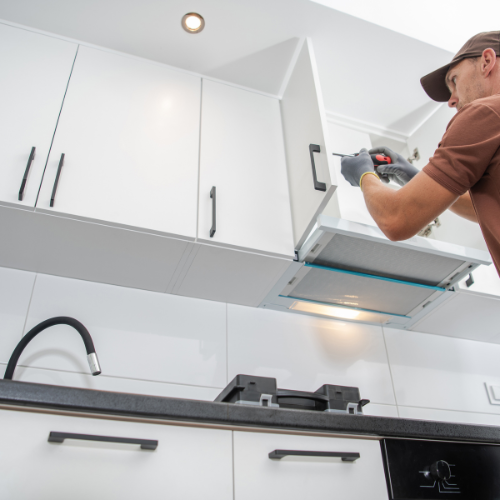
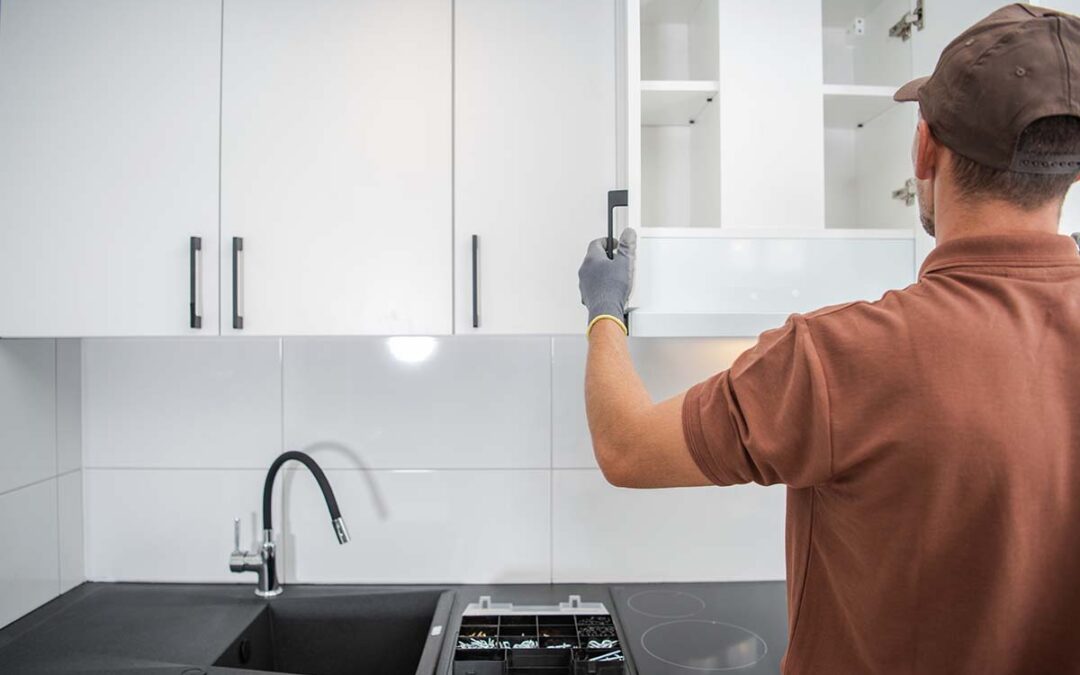
Once the area is ready, remove each cabinet door, drawer fronts, pulls, and hinges. Work one section at a time so parts do not get mixed up. If you are replacing everything, careful removal still matters because it protects the cabinet frames from damage.
Label doors and drawers as they come off, even if you plan to install new doors. The labels help you track sizing and placement. This becomes especially useful in larger kitchens where many openings look similar but are not exactly the same.
Can you install new doors and hardware when refacing laminate cabinets? Yes, and that is often part of the process. New doors, updated drawer fronts, and fresh hinges or handles are common upgrades that help change the style without replacing the whole cabinet system.
Step 3: Clean and Repair Laminate Surfaces
Before any new finish goes on, clean the laminate cabinets well. Dirt, grease, and kitchen residue can interfere with bonding. Even cabinets that seem tidy can hold buildup on cabinet surfaces, especially around handles and cooking areas.
After cleaning, inspect for minor damage. Small flaws may be repairable, while serious swelling or warping usually points to a bigger problem. This step is important because refacing improves appearance, but it cannot hide every issue forever.
- Remove grease and residue from all cabinet surfaces
- Fix minor chips or loose sections before covering them
- Check edges and seams for signs of moisture damage
Does cabinet refacing work on old or damaged laminate surfaces? It can when the damage is light and repairable. If the cabinets are stable, a proper repair can support a refreshed finish and keep the minimal maintenance benefits of laminate.
Step 4: Apply New Laminate or Veneer
This is the stage where the cabinets begin to change visually. Apply new veneer or laminate to the exposed areas of the cabinet frames and sides of the cabinets, following the product instructions closely. Even placement and firm pressure help reduce bubbles and weak spots.
Use the right glue or adhesive for the material you selected. Then smooth the surface carefully with a roller and trim edges cleanly. Neat application is essential because laminate tends to show flaws around seams, corners, and cut lines.
Is 3D laminate a good option for refacing cabinets? It can be, especially if you want a durable finish and a low-maintenance surface. The main point is choosing a product suited to kitchen use and making sure the application is done carefully for a clean, lasting result.
Step 5: Install New Doors, Drawer Fronts, and Hardware
With the outer surfaces finished, install the updated pieces that complete the makeover. New doors and drawer fronts create most of the visual impact, while new hardware sharpens the overall style. This is often the point where the kitchen starts to feel transformed.
Take time aligning everything with the cabinet frames. Uneven spacing or crooked pulls can spoil an otherwise good job. Check swing, spacing, and closure before tightening each fitting completely.
- Hang new doors and adjust hinges for even gaps
- Attach drawer fronts so lines stay straight across the run
- Install new hardware that matches the updated style
Yes, you can install new doors and hardware when refacing laminate cabinets, and you usually should. These updates are a big part of how refacing creates a polished result without changing the full cabinetry layout.
What Sets JMT Cabinets Apart for Laminate Cabinet Refacing?
DIY can work for small updates, but laminate cabinet refacing often calls for careful prep, clean edge work, and accurate fitting. If you want a result that looks polished and lasts, professional help is often the excellent option. That is especially true when you are dealing with older surfaces, alignment issues, or a larger kitchen where mistakes become expensive.
JMT Cabinets stands out by focusing on practical makeovers that keep what still works and improve what you actually see. Instead of pushing full replacement right away, the goal is to help you move closer to your dream kitchen through updated finishes, new doors, drawer fronts, and thoughtful design choices. If your cabinet boxes are still solid, JMT Cabinets can help turn them into a cleaner, more modern space without the stress of starting from scratch.
How to Get Started with JMT Cabinets’ Refacing Services
Getting started is simple. The first step is a consultation so your cabinets, surfaces, and current layout can be reviewed. That helps confirm whether refacing is the right fit and whether your existing cabinet boxes are suitable for a makeover. It is also the best time to talk through style goals, finish choices, and what parts you want to update.
If you have been comparing options at Home Depot or thinking about doing it yourself, a professional review and installation can save you time and guesswork. JMT Cabinets can guide you through choices for doors, drawer fronts, hardware, and finishes that fit your kitchen. Instead of piecing the job together on your own, you get a clearer path to a coordinated update with less hassle and a stronger final result.
Conclusion
In conclusion, refacing laminate cabinets can breathe new life into your kitchen without the need for a full replacement. This process not only enhances the aesthetic appeal but also offers an economical solution to transform your space. By assessing your cabinets, gathering the right materials, and following a step-by-step approach, you can achieve stunning results. However, if you’re looking for professional refacing to ensure a flawless finish, JMT Cabinets is here for you. With our expertise in cabinet refacing, we guarantee quality and satisfaction. Don’t hesitate to get started with our services and take the first step toward a refreshed kitchen today!

Frequently Asked Questions
How much does it cost to reface laminate cabinets in the US?
The average cost for professional cabinet refacing typically ranges from about $4,230 to $10,230. That makes it less of an expensive project than many full new cabinets installations. The final price depends on kitchen size, material choices, and the condition of your laminate cabinets.
Can you DIY laminate cabinet refacing or should you hire a pro?
A diy approach can work for small projects if you have patience, solid prep skills, and the right special tools. Still, laminate cabinet refacing can be tricky. If you are unsure what to buy at Home Depot or want cleaner results, professional help is often worth it.
How long does it take to reface laminate cabinets?
Refacing is usually faster than full replacement. Many projects can be finished in just a few days, though large kitchens may take longer. Since the layout stays the same and only cabinet fronts and visible parts are updated, disruption is lower and the cabinets keep their minimal maintenance appeal.
Does refacing work for old or damaged laminate cabinets?
Refacing works best when cabinets are in good condition and are good candidates structurally. Minor wear on cabinet surfaces can often be handled with repair first. If there is serious moisture damage, warping, or broken framework, refacing is usually not the best long-term solution.